Sustainable Workforce
Financial Information
Talent Recruitment and Retention
Total compensation at CMI includes base salary, allowances, bonuses, and employee profit-sharing. Salaries are determined based on job responsibilities, core competencies, educational and professional background, individual performance, market trends, the company’s strategic outlook, employee retention goals, and shareholder interests. CMI maintains a policy of non-discrimination, ensuring that compensation is not influenced by gender, age, race, religion, political affiliation, marital status, or other unrelated factors.
In 2024, there were no significant differences in compensation between male and female employees across the CMI Group. The slight difference observed at the Head Office is attributable to longer average tenure among male employees compared to their female counterparts.
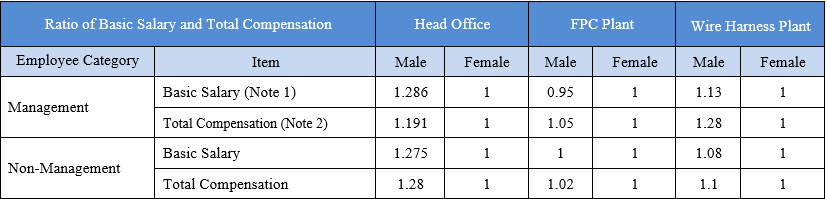
Note 1:
Basic Salary refers to the minimum fixed amount paid to employees for fulfilling their job responsibilities. It excludes any additional forms of compensation, such as overtime pay, bonuses, or allowances.
Note 2:
Total Compensation includes basic salary plus additional payments made to employees. These may include seniority allowances, bonuses (cash and equity-based), benefits, overtime pay, compensatory leave, and other subsidies such as transportation, living expenses, or childcare support.
Local Employee Care
Since its establishment in 1980, CMI has operated in Xindian District, New Taipei City, for more than 40 years. In addition, the Kunshan FPC Plant and Wire Harness Plant in China have been in operation for more than 25 years. As of December 31, 2024, the Group employed a total of 742 employees, of whom 125 were hired locally from the areas where the Company operates, representing a local hiring ratio of 17%.
Among the Group’s operating locations, the local hiring ratio was 25% at the headquarters, 13% at the FPC Plant, and 28% at the Wire Harness Plant. By prioritizing the recruitment of local talent, the Company not only provides stable employment opportunities but also strengthens the connection and trust between the Company and the local community, thereby enhancing the Company’s positive impact on local society.
.
| Location | Total Employees | Local Employees | Local Employment Rate |
|---|---|---|---|
| Headquarters | 71 | 18 | 25% |
| FPC Plant | 530 | 67 | 13% |
| Wire Plant | 141 | 40 | 28% |
| Total | 742 | 125 | 17% |
Quantified Performance Indicators
Total number of employees in the Group: 742
Number of locally hired employees: 125
Local hiring ratio: 17%
Local hiring ratio at headquarters: 25%
Local hiring ratio at the FPC Plant: 13%
Local hiring ratio at the Wire Harness Plant: 28%
Through its local hiring policy, the Company continues to support local employment, strengthen cooperation with surrounding communities, and create stable job opportunities for local residents
Talent Development and Growth
Training and Development System
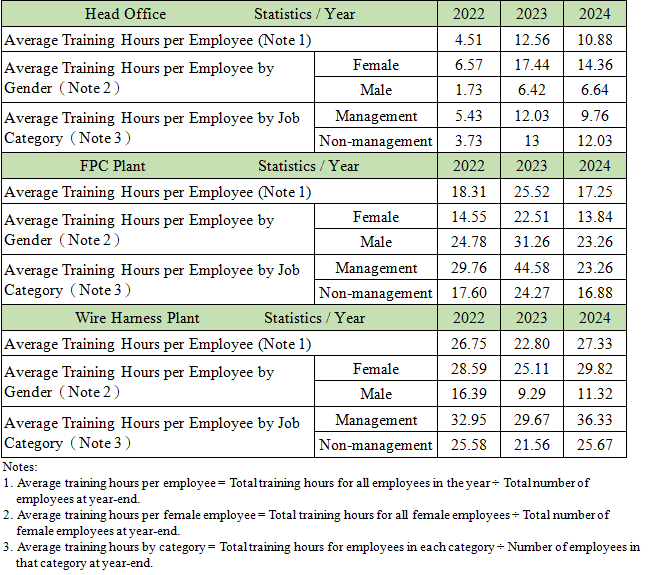
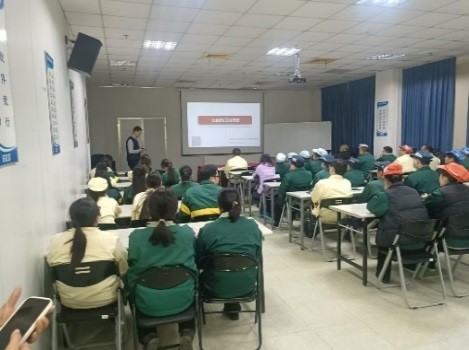
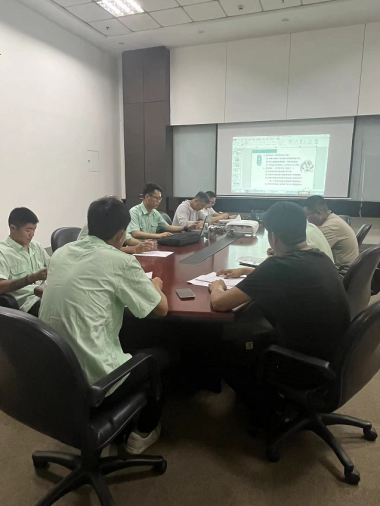
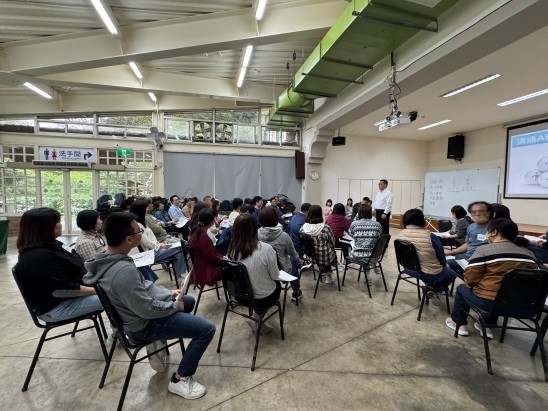
To cultivate talent needed for business development, the company and its subsidiaries have established education and training management guidelines. Annual training plans are developed based on business conditions and human resources needs to enhance management skills and professional capabilities, preparing talent at all levels.
Training Programs:
New Employee Training: Helps new employees understand the company’s culture, history, policies, regulations, core values, quality policies, and business conduct guidelines to integrate quickly into the team.
On-the-Job Training: Tailored to different job levels and positions, including professional skills, management abilities, general knowledge, and required certifications or special job-related training.
Management Level: In line with the Company’s business development strategy and commitment to sustainability, professional, regulatory, and management-related training is provided to supervisors and professional managers to enhance their expertise and leadership capabilities.
In accordance with information security regulations, training is conducted on topics such as information security, personal data protection, and trade secrets to strengthen employees’ awareness of cybersecurity risks and ensure information security.